
silver gold prices In History During War Time: A Deep Comparison Across Major Conflicts
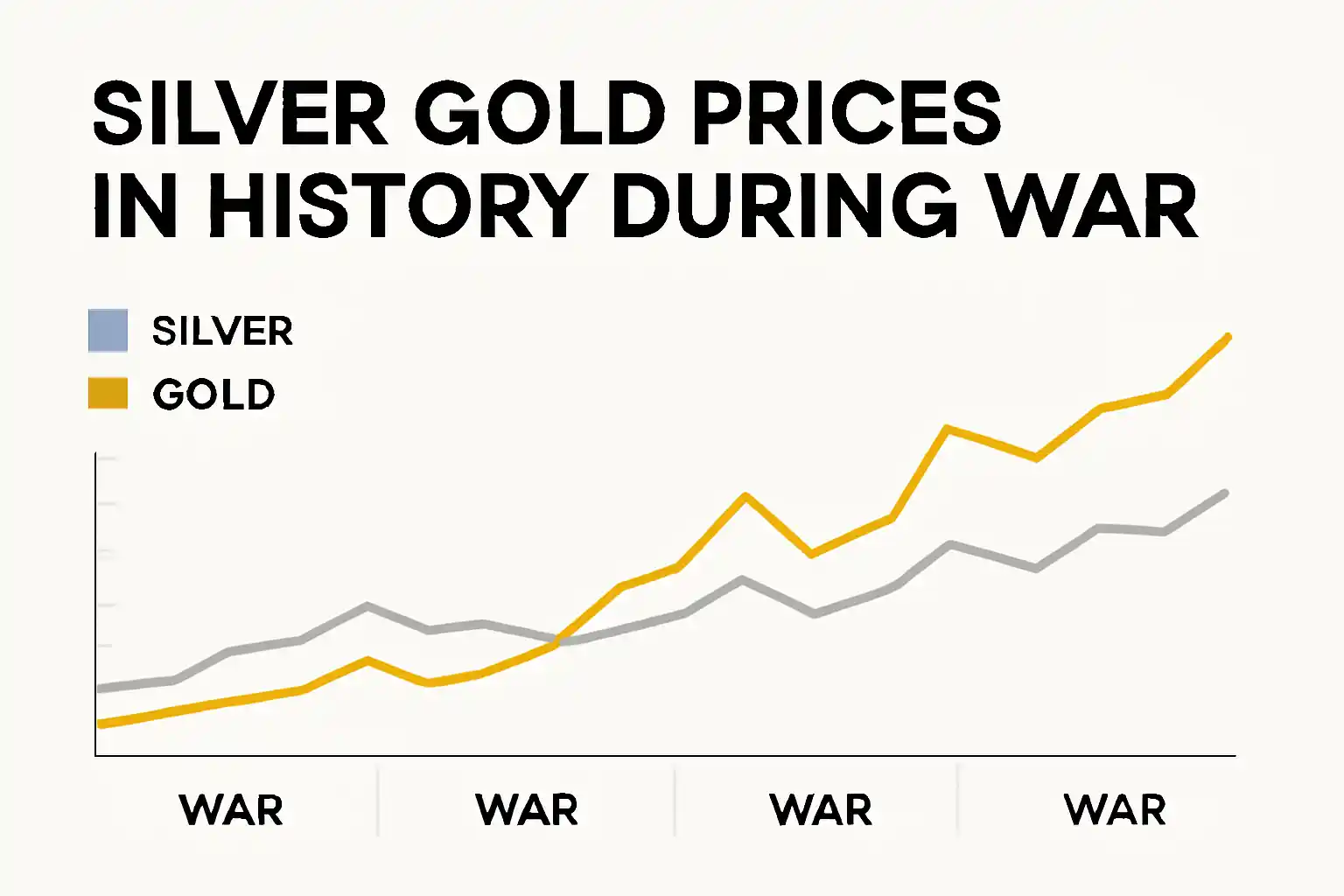
Quick take: In silver gold prices In History During War Time, gold has generally behaved like a financial “stress barometer,” while silver has often acted like a faster, more emotional mix of safe-haven demand and industrial-cycle demand. War matters—but inflation, real interest rates, currency stability, and energy shocks usually matter more. silver gold prices In History During War Time . अधिक जानकारी के लिए microsoft copilot entertainment purposes 9 Ultimate Best भी पढ़ें।
Quick answer: what history actually shows
Direct answer (50–60 words):silver gold prices In History During War Time do not move in a single predictable direction. Gold tends to hold up better when fear rises and real yields fall, while silver can outperform in inflationary booms but may underperform if industrial demand weakens or liquidity dries up. The “war premium” is often temporary unless macro conditions reinforce it. अधिक जानकारी के लिए microsoft copilot entertainment purposes 9 Ultimate Best भी पढ़ें।
When readers search for “gold price during war” or “silver during wartime,” they usually want a simple rule: buy metals when war starts. The historical record is more nuanced. Metals respond to: silver gold prices In History During War Time . अधिक जानकारी के लिए How To Get U DISE CODE For Your School 9 Powerful Best भी पढ़ें।
- Inflation expectations (especially when energy and food prices surge)
- Real interest rates (returns after inflation)
- Confidence in currencies and government debt
- Liquidity conditions (margin calls can force selling)
- Industrial demand (more important for silver)
Why wars move gold and silver (and why sometimes they don’t)
1) War shocks inflation—often through energy and supply chains
Many wars disrupt commodity flows, shipping routes, and insurance costs. If an energy supplier is involved—or if sanctions disrupt oil and gas—global inflation can jump. Historically, that inflation channel is one of the biggest reasons investors turn to gold and sometimes silver. अधिक जानकारी के लिए How To Get U DISE CODE For Your School 9 Powerful Best भी पढ़ें।
2) Central banks respond—and policy can overpower the headlines
Markets quickly shift from “war news” to “rate news.” If a central bank fights inflation aggressively, real yields can rise and reduce the appeal of non-yielding assets like gold. If inflation is rising while policy lags, gold often benefits. silver gold prices In History During War Time . अधिक जानकारी के लिए How To Get U DISE CODE For Your School 9 Powerful Best भी पढ़ें।
Practical proxy indicators you can check (globally, but often led by the U.S.): अधिक जानकारी के लिए How To Get U DISE CODE For Your School 9 Powerful Best भी पढ़ें।
- Policy rates and forward guidance (e.g., Federal Reserve decisions)
- Inflation data (CPI and inflation expectations)
- Real yields (nominal yields minus expected inflation; widely tracked via market measures)
- U.S. dollar strength (often inversely related to USD-priced gold)
3) War can create a “risk-off” bid—especially for gold
Gold is widely held by central banks and is deeply embedded in the global financial imagination as a store of value. In genuine systemic fear—financial contagion risk, sanctions risk, or a credibility shock—gold demand can rise quickly. silver gold prices In History During War Time .
4) But liquidity crunches can hit both metals—silver often harder
In sudden market panics, investors sometimes sell what they can sell to cover losses elsewhere. Silver’s higher volatility and smaller market can amplify these swings. This is one reason “war starts → silver must surge” is not a dependable rule.
Gold vs. silver in wartime: key differences that matter
How gold behaves in silver gold prices In History During War Time
- Primary role: monetary asset, reserve asset, safe-haven store of value
- Most sensitive to: real rates, currency confidence, systemic risk, central bank buying/selling
- Typical wartime pattern: spikes on shock; sustained rallies when inflation rises and real yields stay low/negative
How silver behaves in silver gold prices In History During War Time
- Primary role: store-of-value + industrial metal (electronics, solar, alloys, medical uses)
- Most sensitive to: industrial cycle, manufacturing outlook, plus the same macro forces as gold
- Typical wartime pattern: can overshoot in inflationary manias; can drop sharply in recessions or liquidity squeezes
Volatility comparison (what investors feel day to day)
Silver commonly shows bigger percentage swings than gold. In practical terms, that means silver can outperform in strong bull phases—but can test your patience (and risk tolerance) when fear turns into forced selling. silver gold prices In History During War Time .
A simple “driver map” (more useful than a war calendar)
Gold tends to win when: real yields fall, the currency weakens, risk aversion rises, or central banks accumulate reserves.
Silver tends to win when: inflation rises and industrial demand stays resilient (or stimulus boosts manufacturing), and market liquidity is supportive. silver gold prices In History During War Time .
Case studies: silver gold prices In History During War Time
One caution before we compare: for long stretches of the 20th century, gold pricing was not fully free-floating due to the gold standard and later the Bretton Woods system. That means WWII-era “spot price charts” can mislead if you don’t account for fixed official prices and controls.
World War I (1914–1918): controls, financing, and inflation pressure
WWI was a turning point for how governments financed conflict, with heavy borrowing and monetary expansion. In many countries, gold convertibility was suspended or constrained. This mattered because a controlled monetary regime can mute price signals while still increasing the strategic value of gold reserves. silver gold prices In History During War Time .
- Gold: often constrained by policy rules and convertibility restrictions; the “value” showed up in reserves and confidence rather than a clean market price series.
- Silver: influenced by coinage demand, trade disruptions, and local monetary systems; behavior varied by country and policy.
World War II (1939–1945): fixed prices and strategic accumulation
In the U.S., the official gold price had been reset to $35/oz in 1934 and stayed fixed under the system that later evolved into Bretton Woods. During WWII, the headline “price” therefore didn’t capture wartime fear the way a modern floating market would.
What’s still relevant for silver gold prices In History During War Time analysis is the mechanism: war increased government control, prioritized strategic materials, and led to post-war monetary architecture where gold’s role became institutional. silver gold prices In History During War Time .
The Vietnam War era (roughly 1960s–1975): fiscal strain meets a breaking monetary system
Vietnam matters less because of battlefield events and more because it overlapped with U.S. fiscal deficits, inflation pressure, and the erosion of confidence in the post-war monetary system. The culminating event was the 1971 Nixon shock, when the U.S. ended gold convertibility for foreign governments—effectively accelerating gold’s shift into a market-driven asset.
Takeaway: in this era, gold’s rise fits the model of currency confidence and inflation dynamics, not just “war on the calendar.” silver gold prices In History During War Time .
The Yom Kippur War and 1973 oil crisis: when inflation becomes the main character
The 1973 conflict and resulting oil embargo triggered a global energy shock. This period is central to understanding “gold price during war” searches because it’s one of the clearest examples where war-related supply disruptions fed inflation and changed investor behavior.
- Gold: benefited as inflation surged and confidence in fiat currencies weakened.
- Silver: also attracted inflation-hedge demand but remained more sensitive to economic turbulence.
The Soviet–Afghan War (1979–1989): overlapping with the late-1970s inflation spike
It’s difficult to isolate one conflict from the broader macro regime. The late 1970s and early 1980s included very high inflation in many economies and then aggressive rate hikes (notably in the U.S.). Historically, that shift toward higher real yields is a key reason gold’s inflation-era momentum eventually cooled. silver gold prices In History During War Time .
Lesson for silver gold prices In History During War Time: a war can coincide with a gold rally, but a determined policy pivot toward higher real rates can cap or reverse it.
The Gulf War (1990–1991): a classic “shock spike” then normalization
The Gulf War is often cited because it produced a clear geopolitical shock, especially around oil. Markets frequently price an initial risk premium; once the path becomes clearer, prices can normalize. silver gold prices In History During War Time .
- Gold: tended to react quickly to uncertainty, then fade as risk perceptions stabilized.
- Silver: often moved with gold initially but could be pulled by broader growth expectations.
Iraq War (2003): war headlines vs. the early-2000s macro cycle
In the early 2000s, gold was influenced by a weaker U.S. dollar at times, changing risk sentiment after the dot-com bust, and later the build-up to the global credit cycle. The Iraq War was important geopolitically, but over longer windows, macro forces again dominated.
Global Financial Crisis (2008): not a war, but a crucial stress test
Even though this is not a war, it teaches a wartime-relevant truth: in severe liquidity stress, metals can sell off initially as investors raise cash. Later, gold often benefits when policy easing and negative real yields become the dominant story.
This matters because wartime panics can also trigger liquidity events, especially if they spill into credit markets or energy shocks.
Russia–Ukraine war (2022–present): sanctions, energy, and the “rates vs. fear” tug-of-war
At the invasion shock in early 2022, gold and silver both reacted to heightened fear and inflation expectations (notably energy). As the year progressed, many central banks tightened monetary policy to fight inflation. That tightening raised nominal yields and often strengthened the U.S. dollar—forces that can limit gold’s upside.
Bottom line: this period is a live example of silver gold prices In History During War Time behaving in two phases: (1) shock response, then (2) macro-policy dominance.
Patterns, myths, and what most charts miss
Myth 1: “Gold always rises when war starts”
Gold often jumps on sudden uncertainty, but sustained performance depends on what policymakers do next. If central banks tighten aggressively and real yields rise, gold can struggle even in tense geopolitical periods.
Myth 2: “Silver is basically the same as gold”
Silver can track gold during risk-off episodes, but it also carries an industrial heartbeat. If war coincides with a global slowdown, silver may underperform gold—sometimes sharply.
Myth 3: “The war itself is the main driver”
In silver gold prices In History During War Time, wars are often the trigger, not the engine. The engine is usually a combination of:
- Inflation regime (especially energy-driven)
- Real rate regime
- Currency confidence and reserve policy
- Trade routes, sanctions, and commodity supply
- Liquidity conditions (funding stress)
Pattern 1: Gold reacts to credibility—currencies, debt, and reserves
When trust in paper claims weakens—because of rapid money creation, sanctions risk, or reserve diversification—gold’s monetary role becomes more visible. This is why central bank gold holdings and policy narratives matter, not just war timelines.
Pattern 2: Silver’s “two engines” make it unpredictable in the short run
Silver demand comes from both investors and industry. That mixed identity can create surprising outcomes: silver can surge in inflationary booms but fall hard if manufacturing cools or if markets enter a cash-grab phase.
Pattern 3: The first move is often emotional; the second move is macro
Across many crises, the sequence often looks like this:
- Shock: fear spikes → gold (and sometimes silver) jump.
- Assessment: markets price likely policy responses and growth impact.
- Regime: inflation + real yields + dollar trend decide the longer move.
Direct answer block: “What matters most for gold and silver during war?”
Answer (about 50 words): The most consistent drivers of gold and silver during war are real interest rates, inflation expectations (often via energy), currency strength (especially the U.S. dollar), and liquidity conditions. War headlines can trigger spikes, but sustained trends usually follow monetary policy and the broader economic cycle.
Practical playbook: using history without overfitting it
1) Separate “event risk” from “macro regime”
When a conflict escalates, ask two questions:
- Event risk: Does this raise tail-risk (sanctions, wider regional spread, shipping disruption)?
- Macro regime: Will inflation rise faster than rates (negative real yields), or will central banks tighten enough to offset it?
2) Use a simple checklist before buying after war headlines
- Real yields: trending up or down?
- USD trend: strengthening or weakening?
- Oil and gas: supply shock or stable?
- Equities/credit stress: is there forced selling risk?
- Industrial outlook: supportive for silver or deteriorating?
3) Position sizing matters more with silver
Because silver tends to be more volatile, many long-term investors treat it as a smaller satellite position compared to gold. This reduces the risk of panic-selling during sharp drawdowns.
4) Decide your “tool”: physical, ETFs, or futures (with realistic trade-offs)
- Physical coins/bars: useful for long-horizon holding; consider premiums, storage, insurance, and authenticity.
- ETFs: liquid and convenient; understand fees and structure.
- Futures/options: efficient but complex; margin risk is real, especially in silver.
5) Compare in your local currency, not only USD
This article is global, but your lived reality is local. If your currency is weakening during conflict-driven inflation, gold’s move can look stronger in local terms even when USD gold is flat. The same applies to silver.
6) A realistic “allocation mindset” (not a prediction game)
History suggests metals work best as part of a broader plan rather than a one-time wartime bet. A practical approach many cautious investors use is:
- Hold gold as the core hedge for currency/inflation uncertainty.
- Use silver only if you can tolerate bigger swings and you have a clear reason (inflation + growth, or valuation, or long horizon).
- Rebalance periodically rather than chasing spikes.
Keyword-rich comparison takeaway: silver gold prices In History During War Time
Put simply, silver gold prices In History During War Time are best understood through the lens of policy and inflation. Gold is more purely a monetary hedge; silver adds an industrial layer that can either amplify gains or magnify drawdowns.
FAQ
Do gold prices always rise during war?
No. Gold can rise on fear, but sustained moves depend on real interest rates, the U.S. dollar, and inflation expectations. If policy tightening drives real yields higher, gold may stall or decline even during conflict.
Is silver a safe haven like gold during wartime?
Partly. Silver can attract safe-haven demand, but its industrial demand can dominate—especially if war triggers recession risk or supply-chain slowdowns in manufacturing.
Which wartime era best explains modern “gold price during war” behavior?
The 1970s. After the 1971 end of convertibility and amid the 1973 oil shock, gold traded in a more market-driven setting where inflation and policy responses created patterns still visible in modern crises.
Why didn’t gold “moon” during WWII on charts?
Because the official gold price was fixed for long periods under monetary regimes. Wartime gold dynamics appeared more through reserves, controls, and post-war monetary design than through a floating spot price.
What indicators should I watch today for silver gold prices In History During War Time comparisons?
Real yields, CPI/inflation expectations, USD strength, oil and gas prices, and signs of credit stress. Those indicators frequently explain the difference between a short spike and a lasting trend.
Should a beginner buy gold or silver during a war?
Many beginners do better with a small, disciplined allocation rather than a large headline-driven purchase. Gold is typically easier to hold through volatility; silver can be rewarding but demands more patience and risk control.
Summary
silver gold prices In History During War Time teach one repeatable lesson: wars change markets mainly through inflation, policy, currency confidence, and liquidity. Gold has been the steadier crisis hedge across regimes, while silver’s industrial side makes it more erratic—sometimes a star performer, sometimes a disappointment. Use history as a framework, not a shortcut.
If you want, save this page and revisit it whenever a conflict escalates—then check the same three drivers first: inflation expectations, real rates, and the currency trend.
संबंधित लेख
इस विषय पर और उपयोगी जानकारी के लिए ये लेख भी पढ़ें: